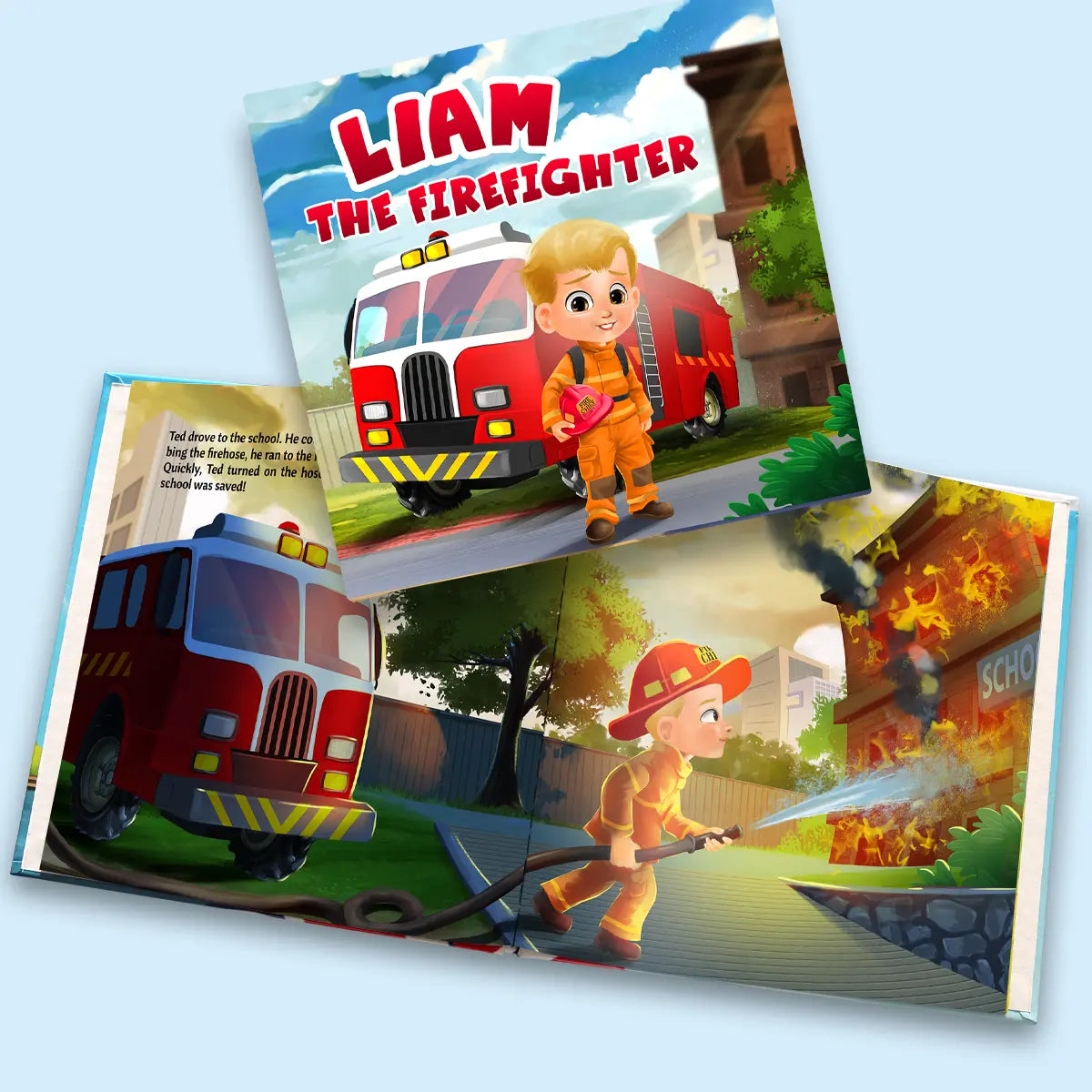


Reading to your child is one of the highest-return habits you can build. Just minutes a day is linked to stronger vocabulary, sharper focus, better emotional regulation, and a foundation for lifelong literacy. Personalized storybooks for kids take those benefits further. When a story features your child's actual name, their exact hair color, and their own skin tone, recognition turns into connection, and connection is where engagement really deepens. That sense of "this is about me" has been linked to measurable improvements in attention, comprehension, and early reading confidence, the kind of edge that can translate to a developmental boost of up to 12 months. It's not magic. It's every proven benefit of daily reading, amplified by seeing themselves on the page.
What Are Personalized Story Books?
Personalized kids' storybooks are stories created with a child in mind. Depending on the title, Dinkleboo books can be personalized with a child's name and a dedication, turning reading activity into a story that is uniquely theirs.
Instead of following an unfamiliar character, children can hear their name as they explore an imaginative world. They can meet animals, discover colors and shapes, head out on an adventure, or settle into a bedtime story.
That familiar detail can make a child curious about what is happening on each page. It encourages them to point to pictures, listen for their name, ask questions, and share their ideas about the story.
How Personalized Books Increase Engagement
Children pay close attention to things that are familiar. Their name carries personal meaning, so hearing it in a story can make reading relevant and exciting.
Personalization can be an invitation to participate. A child may smile when they hear their name, point to it on the page, repeat a familiar phrase, or tell you what they think will happen next. Those small reactions can turn reading from a passive activity into a shared experience.
When children recognize their name or familiar details in a story, they're likely to listen, talk, predict, point, and retell. The learning value comes from the conversation that follows.
Personalized Books and Early Reading Skills
Early reading starts long before a child reads independently. Young children build literacy through listening to language, looking at pictures, turning pages, noticing words, hearing stories in sequence, and speaking with adults.
Children's personalized books can support these early experiences by providing a starting point for shared reading.
Building Print Awareness
Print awareness is a child's growing understanding that the marks on a page carry meaning. A child does not need to know every letter or read every word to begin learning print awareness.
When a child sees their name in a book, they may notice that the same letters appear more than once. A parent or caregiver can point it out to connect spoken language with the words on the page.
Keep the experience relaxed. There is no need to turn every page into a lesson or ask a child to identify letters before they are ready. Simply noticing a name, a repeated word, or a familiar letter can help children see that print is important.
Supporting Vocabulary Through Conversation
Stories introduce children to new words. An underwater story includes words about sea creatures, movement, and colors. A farm story introduces animal names, sounds, and actions. A learning story encourages conversations about shapes, feelings, or everyday routines.
Personalization can help children stay interested while you explore those words together. Instead of quickly moving through the story, pause when a child notices something.
Try simple prompts such as:
- "What do you think that word means?"
- "Can you find the animal in the picture?"
- "What color do you see?"
- "What is happening here?"
- "Have you ever seen something like that?"
- "How do you think the character feels?"
These questions help children connect language, pictures, and personal experience. They also show children that books are something to talk about, not just something to listen to.
Building Story Understanding
Stories help children learn that events happen in an order. There is a beginning, a middle, and an ending. As children hear the same story, they may start to remember what happens first, what changes in the middle, and how the adventure ends.
A personalized story is useful because children are more invested in what happens to the character who shares their name.
Ask questions that invite them to discuss the story:
- "What happened first?"
- "What do you think will happen next?"
- "Why did the character do that?"
- "What was the problem in the story?"
- "How did the adventure end?"
- "Which part did you like best?"
There is no need to ask questions on every page. One or two natural pauses are enough to invite conversation without interrupting the fun.
Name Recognition and Early Literacy
A child's name is the first written word that is important to them. They see it on a backpack, a drawing, a bedroom sign, or a label at preschool. Finding it in a storybook can make the connection between letters and identity clear.
Recognizing a name does not automatically mean a child is ready to read. It is an early way children can begin to notice that print represents something meaningful.
Make Name Recognition Playful
- Point to their name when it appears in the story
- Invite them to say their name aloud
- Notice the first letters together
- Look for that letter elsewhere on the page
- Compare their first letter with a parent's, sibling's, or friend's name
- Ask them to spot their name before you turn the page
If a child is interested in the illustrations, follow their lead. Looking closely at pictures, describing what they see, and enjoying the story are all valuable parts of early literacy.
Repetition, Recall, and Memory
Children learn through repetition. They remember songs, routines, games, and stories by experiencing them more than once. A book that is personal is the one a child asks to hear repeatedly.
With each reread, children may remember a favorite character, notice a new detail, anticipate what happens next, or repeat a familiar phrase. These moments can support listening, recall, and expressive language.
You may notice your child "reading" parts of the story from memory. This is a normal and positive part of learning how books work. They are beginning to understand that stories follow a sequence and that words on the page stay the same each time the book is read.
A Five-Minute Read-Aloud Routine
- Notice: Point out the child's name or a familiar detail on the first page.
- Predict: Ask what they think might happen next.
- Explain: Choose one new word and explain it through the picture or a real-life example.
- Remember: Pause briefly to ask what happened on the previous page.
- Connect: Relate part of the story to something the child has seen, done, or imagined.
Personalized Books for Toddlers and Young Readers
| Child's stage | Story-time focus |
|---|---|
| Toddlers | Naming pictures, finding their name, copying sounds, noticing colors, and enjoying repeated phrases |
| Preschoolers | Talking about feelings, making predictions, exploring new words, and noticing familiar letters |
| Emerging readers | Following repeated text, retelling events, recognizing familiar words, and joining in with favorite lines |
Personalized Books for Toddlers
Personalized books for toddlers work when reading stays simple, playful, and flexible. Young children enjoy turning pages, pointing to pictures, making animal noises, or hearing their name.
That is completely normal. You can support their learning by naming objects, describing pictures, repeating key words, and letting them lead the interaction.
Personalized Books for Preschoolers
Preschoolers may be ready for long conversations about a story. They enjoy predicting what will happen, describing a favorite page, talking about a character's feelings, and connecting story events to their lives.
This is a great age to explore story sequences. You can ask, "What happened after the character got to the farm?" or "What do you think they will do next?"
Children do not need to answer perfectly. The goal is to give them space to think, speak, and enjoy the back-and-forth of reading together.
Personalized Books for Emerging Readers
Children beginning to read enjoy looking for their name, recognizing repeated words, and joining in when they remember a familiar line. They may also like retelling the story in their own words or pretending to read the book to a sibling, toy, or pet.
Celebrate effort. If a child remembers the idea of a page but not every word, they are still practicing story understanding and confidence.
How to Read Personalized Books Together
- Read favorite books more than once
- Let the child choose the story
- Follow their questions and interests
- Point to details in the illustrations
- Give them time to answer before moving on
- Invite them to turn pages, point, and participate
- Use everyday examples to explain new words
- Encourage them to retell a favorite part
- Keep reading positive and pressure-free
For example, after reading a book about colors, look for those colors while getting dressed or walking outside. This helps children see that stories connect to the world around them.
Choosing Children's Personalized Books for Learning
When choosing a personalized story, consider the child's interests and the concepts they are exploring. A book about a topic they already enjoy can make rereading appealing.
- Colors and shapes
- Animals and nature
- Bedtime routines
- Vehicles and community helpers
- Friendship and feelings
- Imaginative adventures
- Everyday places and activities
Dinkleboo's learning books offer engaging, colorful stories that help make early concepts enjoyable during shared reading.
Personalized Books Are One Part of Learning
Personalized story books can be a positive part of an early-learning routine, but they work alongside many other experiences. Children also learn through talking, play, music, drawing, outdoor exploration, library visits, and everyday activities with the adults who care for them.
A personalized book cannot replace targeted literacy support for a child who needs it. The purpose of story time is to help them associate books with curiosity, comfort, connection, and fun.
Explore Dinkleboo's personalized story books, choose a theme your child already loves, and add their name and dedication to an adventure they can enjoy again and again.


